


What are the indications of red light cold laser therapy?
Stroke and neurotrauma
Cerebrovascular accident (CVA)
Cerebral blood flow and cerebral oxygen supply
Damage of brain tissu

What's the technical parameter of the red light cold laser therapy?
|
Laser Medium: |
GaAlAs Semiconductor aser |
|
Treatment Method: |
Nasal Laser Physical Therapy |
|
Laser wavelength: |
810nm |
|
Laser Penetration: |
5-7cm |
|
Product Package Dimension: |
15*15*10cm |
What are the advantages of red light cold laser therapy?
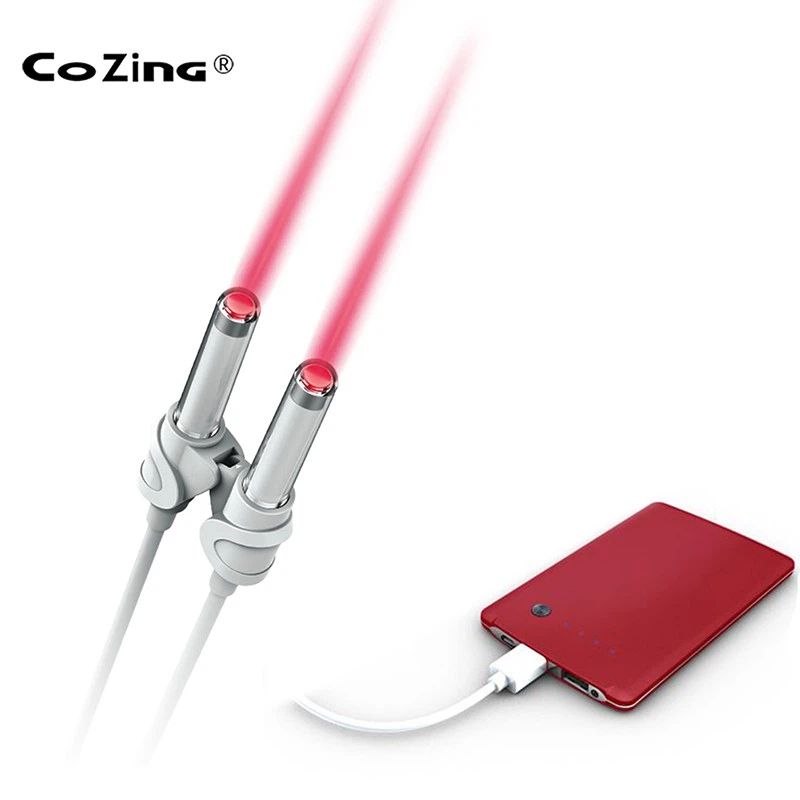
1.Totally get rid of the main unit limited.
2.Easy to usage .
3.Portable and compact .
4.Only plug in, then the laser will output automatically.
5.It can be powered by the portable power bank, adapter or computer.
6.The National patent protected technology .
7.It can reduce the use of drugs and reduce the side effects caused by physical contact with drugs.

How does the red light cold laser therapy works?
Low level cold laser therapy or photobiomodulation refers to the use of low-power and high-fluence light from lasers or LEDs in the red to near-infrared wavelengths to modulate a biological function. Cytochrome oxidase is the primary photoacceptor of LLLT with beneficial brain effects since this mitochondrial enzyme is crucial for oxidative energy metabolism, and neurons depend on cytochrome oxidase to produce their metabolic energy. Photon-induced redox mechanisms in cytochrome oxidase cause other primary and secondary hormetic responses in neurons that may be beneficial for neurotherapeutic purposes. Beneficial in vivo transcranial effects of LLLT on the brain have been observed in anoxic brain injury, atherothrombotic stroke, embolic stroke, ischemic stroke, acute traumatic brain injury, chronic traumatic brain injury, neurodegeneration, age-related memory loss, and cognitive and mood disorders. No adverse side effects have been reported in these beneficial applications of LLLT in animals and humans.

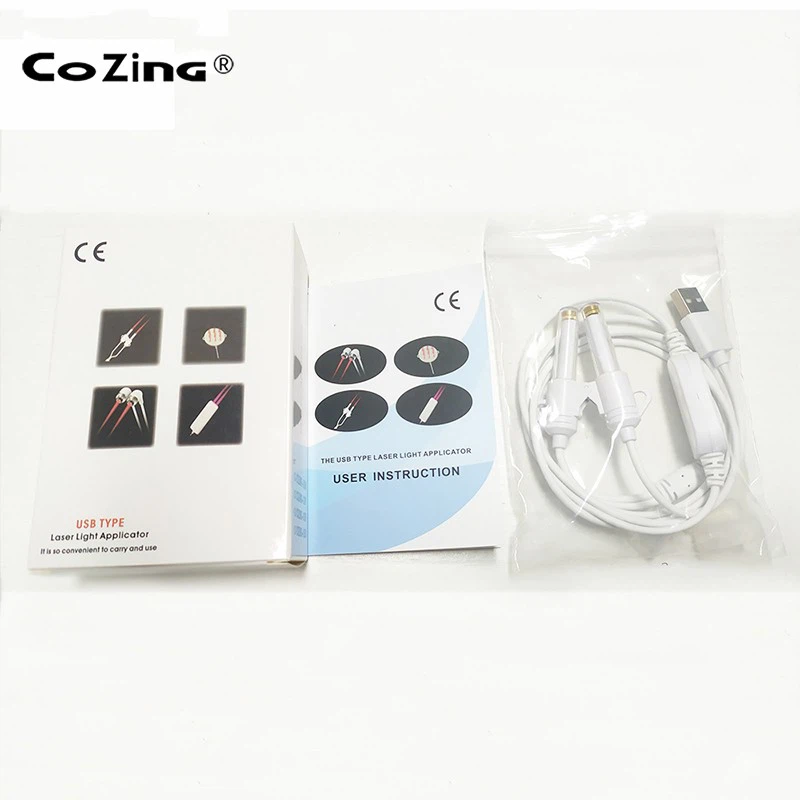
red light cold laser therapy Product Display


COZING-USBN2 red light cold laser therapy Clinical study:
Transcranial Effects
Research has shown that within the visible and near-infrared spectral range, white matter in both the central and peripheral nervous systems reflects most incident power, exhibiting low absorption levels and short penetration depths. Conversely, gray matter demonstrates approximately twice the transmittance compared to white matter. Light penetration varies not only with wavelength and tissue type but also shows significant interspecies differences. For instance, at 850 nm, light penetration in humans is nearly three times higher than in the mouse cortex. This substantial difference can be attributed to variations in water and protein content, highlighting important translational considerations when applying LLLT data from animal models to humans. Additionally, the delivery method of LLLT is crucial for transcranial applications. Non-contact delivery with LEDs can cover extensive areas, suitable for whole-body treatments. LED setups can be ergonomically designed for whole-head and whole-body LLLT in humans. In contrast, contact modalities using laser sources are ideal for localized energy delivery, beneficial for enhancing cell functions in specific neural network nodes and providing neuroprotection for healthy tissue near tumor sites post-resection. It is important to always protect the eyes from laser light during transcranial applications.
Rojas et al. were pioneers in demonstrating that in vivo transcranial LLLT induces beneficial whole-brain metabolic and antioxidant effects, evidenced by increased cytochrome oxidase and superoxide dismutase activities. LLLT has also been observed to enhance cerebral blood flow in humans when applied transcranially. These effects are potentially linked to the neuroprotective and function-enhancing benefits seen with LLLT in vivo. The following data provides proof-of-concept that LLLT may be effective in treating neurovascular, neurodegenerative, and psychiatric disorders associated with impaired energy metabolism. Notably, transcranial LLLT at therapeutic energy densities has shown no adverse histological or behaviOral effects. Preclinical studies indicate that brain stimulation with LLLT in vivo is safe. While massive energy densities 100 times higher than therapeutic levels can induce adverse effects, these can be mitigated by delivering the total energy in intermittent pulses.
FAQ


