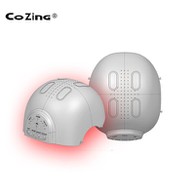
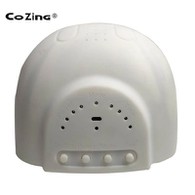
What are the indications of COZING-C320A parkinson's infrared light therapy ?
- Sleep Disorders
- Depression
- Anxiety
- Fatigue
- Motor Function Impairment
- Stroke Recovery
- Parkinson's Disease
- Brain Injuries

What's the technical parameter of the COZING-C320A parkinson's infrared light therapy ?
|
Number of diodes: |
320 LEDs [ODM is acceptable] |
|
Wavelength: |
1050nm LED [ODM is acceptable] |
|
Frequency: |
1-20,000 Hz can be adjusted |
|
The default frequency setting: |
30Hz--The frequency data is not displayed, but there are buttons available to adjust it. |
|
Duration: |
0-30 minutes adjustable |
|
The intensity of the LED: |
25, 50, 75 or 100% can be adjusted, that is means 4 level can be adjusted |
|
Remote controller: |
wireless remote controller |
|
Total Max. output power : |
16W |
|
Single LED max. output power: |
50mW |
|
Operation: |
It can be controlled manually or by remote controller |
What are the advantages of COZING-C320A parkinson's infrared light therapy?
1.Range:Treatment range can be selected, and each range power intensity and time can be adjusted.
2.Frequency: The frequency is adjustable, up to 20,000 Hz.
3.Default Frequency: The default frequency is set at 40Hz.
4.Intensity Settings: 10 levels as the options
5.Remote Control: Operated via a wireless remote controller.
6.Total Output Power: The device's total maximum output power is 16W.
7.Single LED Output: Each individual LED can output a maximum of 50mW.
8.Operation: It can be controlled manually or through the wireless remote controller.

How does COZING-C320A parkinson's infrared light therapy work?
1.Light may enhance dopamine transmission. Multiple lines of research suggest that light can have a direct effect on the dopamine system, and this may be the mechanism of action by which light improves PD symptoms.
2.Near-infrared light is absorbed by cytochrome C-oxidase in the mitochondria, the energy-manufacturing component of the cell. This absorption is thought to have a variety of effects including increasing energy production and regulating cell signaling.
3.Mitochondrial dysfunction is well established to play a role in the development of PD and near infrared light may therefore be able to undo some of this dysfunction.
4.Light therapy may reduce Parkinson's symptoms by targeting mitochondria, the cell's powerhouses, and/or the release of the nerve-signaling molecule dopamine, which is abnormally low in Parkinson's. It may also support nerve function, and reduce pain and inflammation.


FAQ
Q1:What is Parkinson's infrared light therapy?
A1: Parkinson's infrared light therapy is a non-invasive treatment that uses specific wavelengths of infrared light to penetrate the brain and promote cellular repair, reduce inflammation, and improve neurological function in patients with Parkinson's disease.
Q2:How does infrared light therapy help with Parkinson's disease?
A2: Infrared light therapy is believed to stimulate mitochondria in brain cells, increasing cellular energy production (ATP), reducing oxidative stress, and promoting neurogenesis. This process may improve motor function, reduce tremors, and alleviate some of the symptoms associated with Parkinson's disease.
Q3. Does infrared light therapy harm the brain?
A3. No, infrared light therapy is generally considered safe for the brain. The therapy uses specific wavelengths of light that penetrate the skin and tissues to reach deeper structures, including the brain. The light is non-invasive and is designed to stimulate cellular processes without causing harm.
Hot Tags: parkinson's infrared light therapy, China parkinson's infrared light therapy manufacturers, suppliers, factory, virginia tighten laser, ir light therapy, photodynamic therapy, laser treatment for arthritis in dogs, addiction laser, 40 hz light therapy for alzheimer s