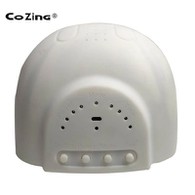
What are the indications of COZING-C320A transcranial photobiomodulation therapy?
Traumatic brain injury
Neuroprotective and to regenerate neurons
Ischaemic stroke
Traumatic Brain Injury.
Post-traumatic stress disorder


What's the technical parameter of the COZING-C320A transcranial photobiomodulation therapy?
|
Number of diodes: |
320 LEDs [ODM is acceptable] |
|
Wavelength: |
810nm LED [ODM is acceptable] |
|
Frequency: |
1-20,000 Hz can be adjusted |
|
The default frequency setting: |
30Hz--The frequency data is not displayed, but there are buttons available to adjust it. |
|
Duration: |
0-30 minutes adjustable |
|
The intensity of the LED: |
25, 50, 75, or 100% can be adjusted, which means 4 levels can be adjusted |
|
Remote controller: |
wireless remote controller |
|
Total Max. output power : |
16W |
|
Single LED max. output power: |
50mW |
|
Operation: |
It can be controlled manually or by a remote controller |
What is tPBM?
tPBM (Transcranial Photobiomodulation) is also referred to as Brain Light Therapy. Low-Level Laser Therapy or Red Light Therapy. It is the use of specific wavelengths of near-infrared light to penetrate the brain and affect cellular processes in the body. A non-invasive approach which helps to improve function and enhance cognitive function, research suggests that near-infrared light has the potential to be neuroprotective, slowing or even completely stopping disease pathology without side effects. Perhaps most exciting is the possibility that ongoing light therapy treatment may help slow, halt or potentially reverse the symptoms of Alzheimer's Disease, Parkinson's Disease and other degenerative brain disorders. While Light Therapy can be an effective treatment for many physical and mental issues, it is also a good preventive technique for healthy individuals.


How does transcranial photobiomodulation therapy work?
Photobiomodulation is the use of light energy to modulate cellular responses. The light source can be a laser or LEDs of specific wavelengths, with an energy below 500 mW producing a molecular effect that is non-thermal. PBM is absorbed by chromophores that change their conformation and thus produce a biochemical and a cellular effect. The most important chromophore is cytochrome-C-oxidase (CCO), complex IV in the electron transport chain in the mitochondria. Absorption of specific wavelengths of light (red and near infrared) cause the CCO to increase the flow of protons across the inner membrane (increasing the mitochondrial membrane potential), release reactive oxygen species (ROS) and increase the binding of oxygen, all of which, in turn, increase ATP production, as well as modulating downstream cellular signalling and gene transcription via cAMP, NO and ROS. PBM also interacts with transient receptor potential vanillin (TRPV) channels, which undergo conformational change and facilitate a range of cellular effects. PBM has proven to be a safe and non-invasive treatment for many conditions. PBM has been used for over five decades in clinical practice to heal tissues, including wounds, burns and chronic ulcers, to relieve pain, to repair deep tissues such as tendons, cartilage and bones, and to reduce inflammation in conditions such as osteoarthritis, endothelial dysfunction and chronic pain . Over this period, PBM has a remarkable safety record with vanishingly small numbers of safety or adverse effects for any condition including cancers.
Most recently, transcranial PBM has been used with increasing frequency to target the brain for trauma (traumatic brain injury (TBI) and stroke), neurodegenerative diseases and neuropsychological conditions. The penetration depth of near-infrared wavelengths of PBM has been shown to be of the order of centimetres , which is sufficient to reach the brain. The external (transcranial) delivery of PBM in animal models has been shown to be effective in pre-clinical models of TBI, stroke, Alzheimer's disease, ALS and MS in reducing symptoms, to be neuroprotective and to regenerate neurons . In humans, transcranial PBM has been trialled, with varying success, for cognitive improvement and to treat ischemic stroke , traumatic brain injury , CTE , PTSD , anxiety and depression , Alzheimer's disease, autism spectrum disorder and addiction to opioids. The use of transcranial PBM (laser and LED) has also proven to be extraordinarily safe with very few side effects, which are invariably minor and transient.
FAQ
Q1:Is there scientific research supporting its effectiveness?
A1:Yes, numerous studies and clinical trials are ongoing to evaluate the efficacy of brain photobiomodulation therapy. Preliminary results are promising,showing potential benefits for various neurological conditions.
Q2:Is the tPBM safe?
A1:Yes, brain photobiomodulation therapy is generally considered safe and non-invasive. It has minimal side effects, which may include mild warmth or transient discomfort at the application site.
Hot Tags: photo bio modulation treatment, China photo bio modulation treatment manufacturers, suppliers, factory, photo bio modulation therapy, brain light therapy device, red light therapy device for brain, laser photobiomodulation therapy, light therapy for brain, photobiomodulation brain