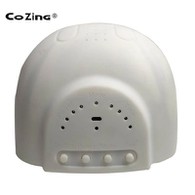
What are the indications of COZING-C320A brain photobiomodulation therapy ?
Alzheimer's Disease
Dementia
ADHD
Anxiety
Parkinson's Disease
Long Covid
Stroke


What's the technical parameter of the COZING-C320A brain photobiomodulation therapy ?
|
Number of diodes: |
320 LEDs [ODM is acceptable] |
|
Wavelength: |
810nm LED [ODM is acceptable] |
|
Frequency: |
1-20,000 Hz can be adjusted |
|
The default frequency setting: |
30Hz--The frequency data is not displayed, but there are buttons available to adjust it. |
|
Duration: |
0-30 minutes adjustable |
|
The intensity of the LED: |
25, 50, 75, or 100% can be adjusted, which means 4 levels can be adjusted |
|
Remote controller: |
wireless remote controller |
|
Total Max. output power : |
16W |
|
Single LED max. output power: |
50mW |
|
Operation: |
It can be controlled manually or by a remote controller |
What is Photobiomodulation?
Photobiomodulation (PBM) describes the use of red or near-infrared light to stimulate, heal, regenerate, and protect tissue that has either been injured, is degenerating, or else is at risk of dying. One of the organ systems of the human body that is most necessary to life, and whose optimum functioning is most worried about by humankind in general, is the brain.The brain suffers from many different disorders that can be classified into three broad groupings: traumatic events (stroke,traumatic brain injury, and global ischemia), degenerative diseases (dementia, Alzheimer's and Parkinson's), and psychiatric disorders (depression, anxiety, post traumatic stress disorder). There is some evidence that all these seemingly diverse conditions can be beneficially affected by applying light to the head. There is even the possibility that PBM could be used for cognitive enhancement in normal healthy people. In this transcranial PBM (tPBM) application, near-infrared (NIR) light is often applied to the forehead because of the better penetration (no hair, longer wavelength).
Is photobiomodulation therapy supported by scientific research?
Yes, over 8000 studies have been conducted with 999 of those studies pertaining to the brain, and the research continues to expand. Promising results have been found Alzheimer's Disease and Dementia, ADHD, Anxiety, Parkinson's Disease, Long Covid, Stroke.


What Happens during a session?
After an initial assessment to determine your specific needs and identify the areas of the brain which may be affected, a brain helmet equipped with near-infrared LEDs is placed on the head for a period of 5-30 minutes. During that time, clients sit quietly, read or watch a show. The areas of concern are targeted using near-infrared light. Wavelength, pulsing, power, and light placement are all key factors in determining the correct dosing and protocol for each brain. As the brain becomes accustomed to the light therapy, time and potency will be increased. Although the brain is given an immediate boost, it can take time to notice the effects. TPBM can be used alone or in combination with neurofeedback, with even greater potential results when combined. Light Therapy helps to prime and enhance the plasticity of the brain as new brain patterns develop through neurofeedback.
Outcomes of Studies
ADHD: Significant decrease in symptoms with improved mood, greater ability to focus, organize and manage ADHD symptoms.
Anxiety: Significant reduction of symptoms and improved sleep, with immediate relief after light therapy.
Alzheimer's Disease/Dementia: Significant improvements in cognitive/executive function, attention, sleep, behavioral symptoms and dementia.
Autism: Effectively reduced severity of Autism with a reduction in irritability, cognitive and behavioral rigidity, non-compliant behavior and parental stress. Both sleep quality and attention improved.
Depression: Enhanced mood, reduced depressive symptoms.
Long Covid: Significantly improved cognitive/executive function, processing speed and reduced brain fog. Severe body reactions such as inflammation, breathing problems, organ failure, nerve damage and blood clotting were reduced.
Parkinson's: Improved mobility, gait speed, stride length, cognition, dynamic balance and fine motor skills.
PTSD: Significant improvements in symptoms of PTSD, cognition, sleep and physical health.
FAQ
Q1:What is brain photobiomodulation therapy?
A1:Brain photobiomodulation therapy uses specific wavelengths of light, typically in the near-infrared spectrum, to stimulate brain tissues. This non-invasive therapy aims to enhance cellular function, promote healing, and improve cognitive performance.
Q2:Are there any contraindications?
A2:While generally safe, patients with certain conditions, such as active cancer or those using photosensitizing medications, should consult their healthcare provider before undergoing treatment.
Hot Tags: brain photobiomodulation therapy, China brain photobiomodulation therapy manufacturers, suppliers, factory, light therapy for brain, photobiomodulation brain, red light therapy device for brain, laser photobiomodulation therapy, photo bio modulation therapy, brain light therapy device