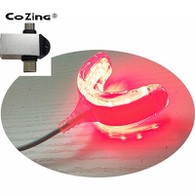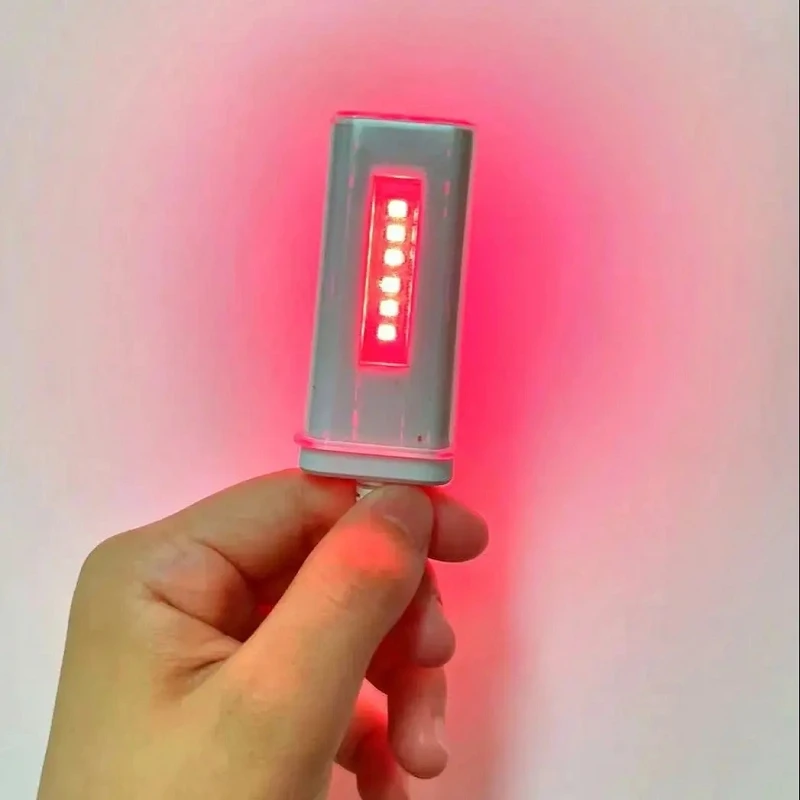


periodontist laser gum treatment
What is the technical parameter of the periodontist laser gum treatment COZING-USBO4?
Type: 12 LED+2Laser Red Light Therapy for Cold Sore & Canker Sore & Pain Relief
Material:medical grade ABS
Size: portable
Power supply: usb connector
Power output: DC5V/1000mA
Wavelength: 660nm led+ 650nm laser
Ambient temperature+5 ℃ to+40 ℃
Relative temperature: 30% - 75%

How does periodontist laser gum treatment working?
The Soft cold diode laser we use works by modifying the nerve conduction in the lesions; it vaporizes the tissue around the sore and sterilizes the area. The laser also stimulates cell turnover to speed the wound healing time and decrease the time the sore lasts. Low Level Laser Therapy (LLLT) has shown excellent results in relieving the pain and complete remission of the Oral ulcers.
Laser treatment of recurrent aphthous stomatitis is an easy, fast and pain-free procedure. Studies have shown that ulcers treated by laser therapy provide immediate pain relief and fewer recurrences in the future. The main advantage of the LLLT compared to other treatment options is that it can be used for all the causes of the disease both without having any side effects and without the risk of medication overdose. In conclusion, laser treatment offers advantages for both the clinician and the patient.

Product clinical effect:
Including pain relief, accelerated healing, reduced recurrence, and bacterial control. It provides a non-invasive and well-tolerated treatment option for patients suffering from Oral ulcers.

The main principles of laser therapy:
1.Photobiomodulation: Laser therapy utilizes a process called photobiomodulation or low-level laser therapy (LLLT). When the laser light interacts with the tissues, it triggers a photochemical reaction within the cells. This reaction stimulates various cellular processes, including increased ATP production, improved blood circulation, and enhanced tissue repair.
2.Pain reduction: The laser's energy can help reduce pain associated with oral ulcers. It achieves this by reducing inflammation, blocking pain signals, and stimulating the release of endorphins, which are natural pain-relieving substances. Laser therapy can provide immediate relief and improve the overall comfort of the patient.
3.Tissue regeneration: Laser treatment promotes tissue regeneration and accelerates the healing process. The laser's energy stimulates cellular activity, including fibroblast proliferation and collagen synthesis. This helps to rebuild damaged tissues, close the ulcer, and speed up the formation of new epithelial cells.
4.Bacterial control: Laser therapy has antimicrobial effects and can help control bacterial growth in the oral cavity. By targeting the ulcer site, the laser kills bacteria and reduces the risk of secondary infections. This is particularly beneficial for preventing complications and promoting faster healing.
5.Non-invasive and precise: Laser treatment is non-invasive and precise, allowing for targeted therapy without causing damage to surrounding healthy tissues. The laser can be adjusted for different wavelengths and power levels to suit the specific requirements of each patient and ulcer.