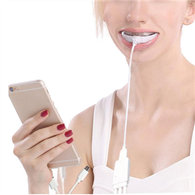
What's the technical parameter of the dental laser periodontal therapy?
|
Brand |
COZING |
|
Model |
COZING-USBO |
|
energy source |
electricity |
|
Material |
plastic, tooth model |
|
Shelf life |
2 years |
|
Quality Certification |
CE |
|
Instrument classification |
Class I |
|
Product Specifications |
3200 mW |
|
Wavelength |
650nm laser therapy device |
What are the advantages of dental laser periodontal therapy?
Compared with traditional periodontal surgical treatment, the advantages of laser treatment are mainly reflected in 6 aspects.
① Minimal side effects, light tissue damage, and accelerated postoperative healing;
②Improve patient comfort;
③Excellent hemostatic and coagulation effects, essential for medical patients;
④ Some surgeries require only topical anesthesia;
⑤ The concept of minimally invasive dentistry (MID) can be realized;
⑥Laser treatment is safe as long as the operator follows the rules

What are the indications of dental laser periodontal therapy?
- Gingivectomy
- Remove growth
- Vestibuloplasty
- Gingival sulcus debridement
- Remove soft tissue, cysts and fibroids (non-malignant tumors, mucosa, tongue)
- Stop bleeding at tooth extraction site
- Treatment of ulcerative lesions, including aphthous ulcers
- Heat source that activates tooth bleaching materials
- Biopsy (incision and excision)
- Aphthous ulcer (incision and excision)
- Salivary gland pathology
- Preparation of gums and white spots before restoration
- Periodontal gingivectomy
- Crown lengthening (soft tissue)
- Incisional infection when used together with antibiotic treatment

How does dental laser periodontal therapy work?
COZING laser can change the permeability of blood vessels, reduce the speed and degree of inflammatory exudation, reduce congestion and edema; relax blood vessels, accelerate blood flow, promote the absorption of inflammatory exudation and the dissipation of inflammatory cell infiltration, and through human immunity Function, enhance the body's local anti-infection ability.
COZING laser can promote the formation of new blood vessels, promote hair growth, increase RNA and glycogen content in skin and muscles, accelerate fibroblast formation, granulation tissue proliferation, epithelial cell regeneration, and accelerate the healing of wounds and ulcers.
COZING laser can reduce the content of 5-hydroxytryptamine, increase the pain threshold, and cause the release of morphine-like substances, thereby reducing local irritation reactions and exerting an analgesic effect.

What is laser periodontal treatment?
Laser periodontal treatment is a revolutionary dental procedure that uses laser technology to treat periodontal disease.
It is a minimally invasive and highly effective alternative to traditional gum surgery.
The laser can precisely target infected tissue without damaging surrounding healthy gum tissue.
It treats the symptoms of periodontal disease and restores gum health and supports Oral bone health.

How laser therapy works?
Laser therapy works by using a specialized laser that emits concentrated light energy to remove infected gum tissue and bacteria around the teeth. The laser targets only diseased and inflamed gum tissue, leaving healthy tissue intact. This precision results in less pain, less bleeding, and faster recovery than traditional gum surgery.
Laser energy is absorbed by pigmented bacteria and inflamed tissue, causing them to be vaporized or eliminated. This helps remove diseased gum tissue and disinfect the area, reducing bacteria levels and promoting healing.
In addition, lasers can be used to remove tartar buildup below the gum line, helping to restore healthy gum-to-tooth attachment.
The dentist will begin the procedure by numbing the affected area with a local anesthetic. Once the patient feels comfortable, the dentist uses a laser to remove infected tissue and bacteria around the tooth. The laser can also disinfect the area to promote healing.

FAQ