


What's the indications of the canine cold laser therapy?
- Hiding or isolation
- Sleeping a lot or in only one position
- Lack of interest in food and water
- Growling or hissing when touched
- Abnormal body positions
- Restlessness
- Change in food preferences, sleeping spots or litter box habits
- General irritability
- Reluctance to jump to favorite spots
- Reduced social interactions with owners or other animals
- Ulcerations and open wounds
- Muscle, ligament and tendon injuries
- Sprains and strains
- Pododermatitis (inflammation of the footpads)
- Neuromuscular disease
- Degenerative disc or joint disease
- Inflamed ears
- Post-surgical trauma


What's the technical parameter of the canine cold laser therapy?
|
COZING-T05 Technical Parameters |
|
|
Battery Capacity: |
Built-in lithium battery 5200mAh |
|
Terminal Laser output: |
6 laser beams with 808nm,19 laser beams with 650nm |
|
Voltage: |
110-240V,50-60 Hz |
|
Working Mode: |
Pulse mode and continuous mode |
|
Time Setting: |
Start from 1 minute,1-60 minutes,adjustable |
|
Adapter: |
Europe America standard |
|
The Max. |
output:1295mW |
|
Display: |
Gray LCD display |
|
Model |
Wavelength |
Max. Output |
|
COZING-T05 |
808nm+650nm |
1200mw |
|
COZING-T05-1 |
808nm+650nm |
2W |
|
COZING-T05-2 |
808nm+650nm |
3W |
|
COZING-T05-3 |
808nm+650nm |
4W |
|
COZING-T05-4 |
808nm+650nm |
5W |
|
COZING-T05-5 |
808nm+650nm |
6W |
|
COZING-T05 (Rental) |
808nm+650nm |
1200mW |
|
COZING-T05P1 |
650nm+904nm |
25W |
|
COZING-T05P2 |
650nm+904nm |
75W |
|
COZING-T05-6 |
808nm+650nm |
7W |
|
COZING-T05-8 |
808nm+650nm |
9W |
|
Customized |
830nm/904nm/650nm/450nm/660nm/808nm |
100mw-75w as the customiz |
What is the advantages of the COZING-T05V?
①Treatment is painless
②Highly effective for many diseases and conditions
③Eliminates pain
④Reduces the need for pharmaceuticals
⑤Restores normal range of motion and physical function
⑥Easily applied
⑦Non-invasive
⑧No known adverse effects
⑨No drug interactions
⑩Provide alternative therapies for patients who have not responded to other treatments
⑪A 4-level laser therapy device with four wavelengths: 650 nm, 808 nm, 830 nm, and 904 nm.
⑫Ulcerations and open wounds


what is canine cold laser therapy working Principle?


Application of laser therapy in veterinary practice
Laser therapy has been applied in different specialties procedures, practices, and devices. There appear to be many distinct benefits to using a therapeutic laser. These include angioplasty, cancer diagnosis, cancer treatment, dentistry, cosmetic dermatology such as scar revision, skin resurfacing, laser hair removal, tattoo removal, dermatology, to treat melanoma, frenectomy, lithotripsy, laser mammography, medical imaging, microscopy, ophthalmology (includes Lasik and laser photocoagulation), optical coherence tomography, optogenetics, prostatectomy plastic surgery, in laser liposuction, and in treatment of skin lesions (congenital and acquired) and in scar management (burns and surgical scars), surgery, and to cut, ablate, and cauterize tissue.
Moreover, laser light therapy can also be used in Neovascularization, Angiogenesis, and Collagen synthesis which enhances wound healing, Stimulation of nerve healing, Enhanced healing of tendons, cartilage, and bones, reduce of swelling from an injury, Modulation of degenerative tissue changes, and Mitigation of CNS damage following traumatic brain injury and spinal cord injury [18]. The optimal wavelengths, intensities, and dosages for laser therapy in pets have not yet been adequately studied or determined, but this is sure to change as studies are designed and as more case-based information is reported. To maximize laser penetration, the pet's hair should be clipped.
During the application of laser beams, it is recommended to hold the laser perpendicular (90 degrees) to the skin surface to minimize the reflection of the laser. Moreover, to minimize the scattering effect of the laser beams, the lasers should be applied directly to the skin that helps the beams to pass deeper into the tissue. For this purpose, using lasers having wavelengths in the range of 600 to 1200 nm. Besides, using lasers with larger spot areas allows more homogeneous passage of photons, and greater treatment area with less scatter of the beams .
When creating a treatment protocol for therapeutic laser, it is important to consider these effects to maximize patient outcomes. The actual time the tissue is exposed to light energy may also affect the outcome. Thus, proper application of laser therapy is not technically difficult, but it does require attention to be paid to basic technical principles, which can have profound effects on the success of treatment of the targeted tissue or area. Often, a lack of attention to these details is responsible for suboptimal outcomes .
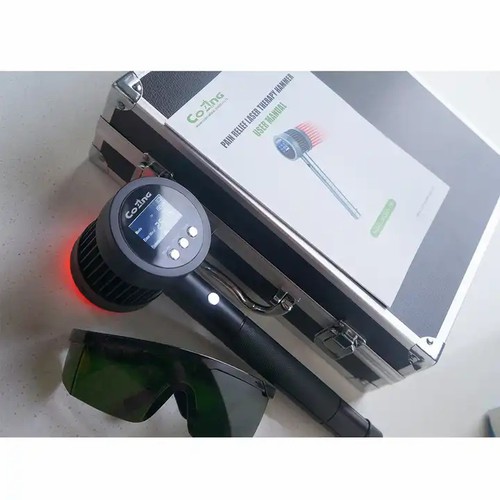
Product Display:
FAQ


