


What are the indications of the COZING-IN01 acupuncture for sleep insomnia?
• Inability or difficulty falling asleep at night
• Waking up often during the night
• Waking up before you've gotten enough sleep
• Not feeling well-rested
• Daytime fatigue or desire to sleep
• Irritability, depression, or anxiety
• Difficulty focusing and recalling information

The efficacy of cranial electrotherapy stimulation (CES) in alleviating insomnia, as demonstrated in two sham-controlled randomized clinical trials, exhibits varied outcomes. In a study comprising 57 active-duty service members, a 5-day CES treatment (60 minutes per day, 100 μA, 0.5 Hz) utilizing the COZING-IN01 device failed to yield significant changes in sleep duration compared to sham treatment. CES electrodes were affixed to bilateral earlobes, while the sham intervention employed an inactive device. Notably, there was no comparative evaluation of cutaneous perception between active and sham groups, prompting speculation on the adequacy of CES intensity to evoke consistent sleep-related effects, albeit lacking subsequent investigations.
A second double-blind randomized placebo-controlled trial involving 40 females without sleep disorders failed to detect significant CES effects on sleep latency or quality relative to sham treatment. Employing the COZING-IN01 device with bilateral earlobe electrodes (60 minutes, 100 μA, 0.5 Hz), the study noted no vestibular or cutaneous sensation differences between active and sham groups. While no significant alterations in sleep metrics were observed, evidence of EEG α band alterations emerged, notably a decline in low-frequency (8–10 Hz) α band peak frequency at specific EEG electrode sites, with no corresponding changes in high-frequency (10–11 Hz) α band. However, the authors highlighted the need for replication of EEG peak frequency findings due to their apparent specificity.
In conclusion, despite a paucity of studies demonstrating definitive CES efficacy in treating insomnia, the potential for symptom alleviation warrants further investigation, particularly in larger, methodologically rigorous trials.

What's the technical parameter of the acupuncture for sleep insomnia device?
|
Pulse modulation frequency range: |
OHIz-15Hz |
|
Pulse duration time: |
100ms ± 10ms |
|
Single pulse width: |
2ms 土0.4mS |
|
Pulse repetition frequency: |
250Hz±50Hz |
|
Lose the amplitude value: |
1.8土0.2V (5002) |
|
Built-in lithium battery voltage: |
3.7 -4.2V |
|
The choice of stimulus time: |
15 minutes |
What are the advantages of the COZING-IN01 acupuncture for sleep insomnia?
1. CES for depression, Irritability, and insomnia.
2. Improved pulse control, increases serotonin levels through gentle.
3. Reduced mood swings
4 . Approved by EMA for over-the-counter treatment.
5. Connect the Earclip to the main unit
How does the COZING-IN01 acupuncture for sleep insomnia work?
The CES is called transcranial microcurrent stimulation, which has been included in the Chinese guidelines for the diagnosis and treatment of insomnia. Simply put, this therapy involves
It is achieved by stimulating the brain with an electric current, which stimulates the secretion of neurotransmitters (such as endogenous morphine) that are beneficial for calming and generating pleasure in the brain. Ethylcholine and serotonin can improve physiological signals, such as improving the amplitude frequency characteristics of brain waves and reducing the possibility of abnormal brain wave emissions, such as insomnia, anxiety, and depression. Although so far, transcranial microcurrent stimulation therapy, the mechanism of CES, has not been determined yet, after years of clinical practice, it has indeed been confirmed that this therapy has a certain effect on insomnia.

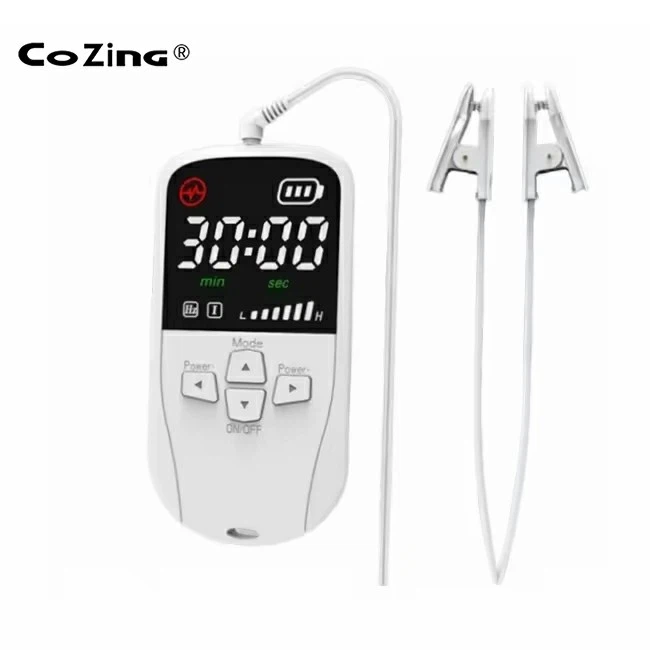
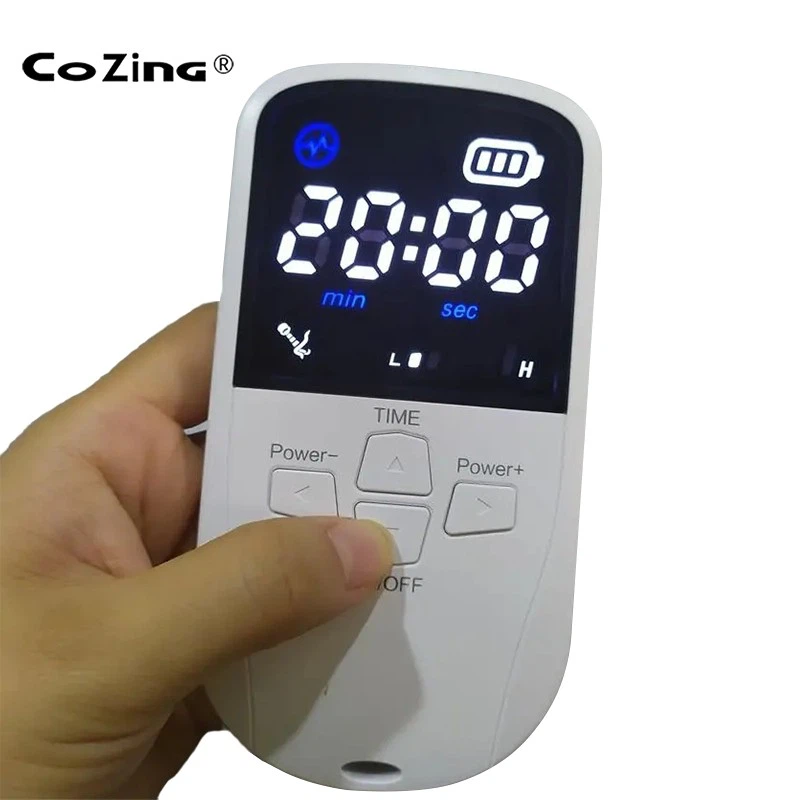
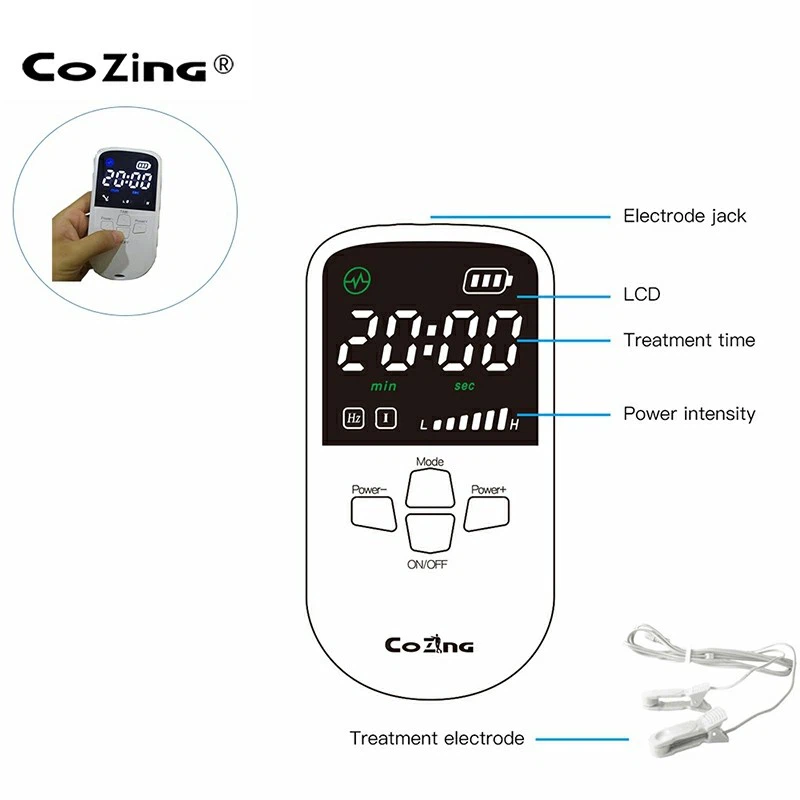
COZING-IN01 acupuncture for sleep insomnia Product Display:


FAQ


