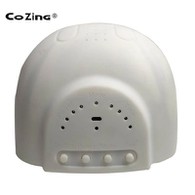
What are the indications of COZING-C320 photobiomodulation laser therapy?
Stroke
Acute and Chronic TBI
Alzheimer's Disease
Parkinson's Disease
Depression and Related Psychiatric Disorders
Cognitive Improvement among Healthy Subject


What's the technical parameter of the COZING-C320 photobiomodulation laser therapy?
|
Model: |
COZING-C320 |
|
LED Wavelength: |
1050nm±20nm |
|
Led Quantity: |
344 |
|
Power(total helmet): |
16360mW |
|
Power(one LED): |
50MW |
|
Frequency: |
1-20,000 Hz can be adjusted |
|
The intensity of the LED: |
1-10 levels as the options |
|
Voltage |
5V |
|
Power supply |
Lithium battery or elelctric source |
|
Charge port |
USB TYPE C charge port |
|
Treatment zone in the brain |
12 zones |
|
Customized treatment protocol |
Can be saved |
|
Operation |
By the manual or by the remote controller |
What are the characteristics of the COZING-C320 photobiomodulation laser therapy?
1.The C320 device is equipped with 320 diodes, covering 12 regions of the head.
2.It allows customization of time, pulse rate, and intensity settings.
3.The 1050nm wavelength penetrates the skull and reaches the brain, aiding in the recovery from traumatic brain injuries and reducing long-term neurological damage.
4.Adjustable frequency range: 1–20,000 Hz.
5.Compatible with ear canal and nasal probes, enabling light stimulation at two key locations to activate the vagus nerve: one in the ear canal and the other in the nasal cavity.
6.Features a Type-C charging port for convenient power supply
COZING-C320 photobiomodulation laser therapy Clinical study:
Background: Laboratory studies have shown that near-infrared (NIR) light therapy can reduce amyloid-beta burden in Alzheimer's disease (AD) models. However, previous clinical research has been insufficient.
Objective: Before initiating large-scale clinical trials, we conducted a preliminary study to evaluate the efficacy of NIR light therapy in patients with AD.
Methods: Twenty patients with mild-to-moderate AD were randomly assigned to an intervention group (1060–1080 nm and 800–820 nm NIR light therapy for 12 weeks) or a control group (no sham treatment). Safety and efficacy were assessed at baseline, weeks 4, 8, 12, and 4 weeks post-treatment.
Results: At week 12, the mean change from baseline in the Alzheimer's Disease Assessment Scale-Cognitive Subscale (ADAS-Cog) was -3.1 in the intervention group and -1.3 in the control group (p = 0.5689). For activities of daily living (ADL), the mean changes were -3.6 and 3.1, respectively (p = 0.0437). For the Mini-Mental State Examination (MMSE), the mean changes were 4.4 and 1.0, respectively (p = 0.0253). The percentage of participants showing a greater than 4-point change from baseline to week 12 in ADAS-Cog, ADL, and MMSE was 57% vs. 29%, 29% vs. 0%, and 57% vs. 14%, respectively, in the intervention and control groups. NIR light therapy did not increase the incidence of adverse events.
Conclusion: NIR light therapy appears to be safe and potentially beneficial for patients with AD, improving cognitive function and daily living activities. Preliminary findings encourage the development of a large-scale, multicenter, double-blind clinical trial.
Hot Tags: photobiomodulation laser therapy, China photobiomodulation laser therapy manufacturers, suppliers, factory, red light therapy device for brain, light therapy for brain, photobiomodulation brain, brain light therapy device, photo bio modulation therapy, laser photobiomodulation therapy