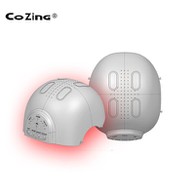
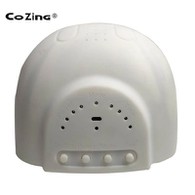
What are the indications of COZING-C400 photobiomodulation devices brain?
Mild traumatic brain injury
Impaired cognitive function
Alongside reduced mental wellbeing.
Anxiety, depression and other psychological symptoms
Improves cognitive function after traumatic brain injury


What's the technical parameter of the COZING-C320 photobiomodulation devices brain?
|
Number of diodes: |
436pcs LED |
|
Wavelength: |
810nm LED,1050nm and 660nm |
|
Frequency: |
1-20,000 Hz can be adjusted |
|
The default frequency setting: |
CW:40Hz Pulse:10Hz 1-20000Hz can be adjusted |
|
Duration: |
0-30 minutes adjustable |
|
The intensity of the LED: |
1-10 levels as the options |
|
Remote controller: |
wireless remote controller or operated by manual also supported. |
|
Total Max. output power : |
21W |
|
Battery Capacity: |
2000mAh |
|
Operation: |
It can be controlled manually or by remote controller |
How does COZING-C320 the photobiomodulation devices brain?
Near-infrared laser (810nm) illumination of the shaved scalp, the depth of penetration of the cerebral cortex reaches 20 millimeters, and the light scattering effect of near-infrared laser is weaker;
it can penetrate deeper into living tissues, and cause less damage to the organism. Because of these advantages, NIR-based photobiomodulation has been widely used to relieve pain or inflammation, modulate immune function, promote wound healing and facilitate tissue regeneration.
Utilizing these functions, photobiomodulation has been studied and applied in the fields of neurotrauma, neurodegenerative diseases and neuropsychiatric disorders.


What is the principle of the photobiomodulation devices brain?
1.The potential and widely recognized mechanism of PBM (Photobiomodulation) involves the absorption of light by cytochrome c oxidase (CCO), the terminal enzyme of the mitochondrial electron transport chain (ETC). CCO catalyzes the transfer of electrons from cytochrome c to molecular oxygen in the final step of the ETC. This electron transfer process is coupled with the pumping of protons across the inner mitochondrial membrane, creating an electrochemical gradient that drives ATP synthase to synthesize adenosine triphosphate (ATP).
CCO contains two heme centers and two copper centers, which act as chromophores capable of absorbing photons in the red to near-infrared wavelength range. The absorption of photons delivered by PBM increases CCO activity and ATP synthesis, thereby enhancing mitochondrial function and initiating various cellular processes. Additionally, PBM may promote the dissociation of inhibitory nitric oxide (NO) from the CCO molecule, further facilitating electron transfer.
2.Transcranial PBM can also prevent Alzheimer's disease (AD)-related synaptic dysfunction by reducing AMPA receptor endocytosis. Synaptic dysfunction is another critical pathological process contributing to memory impairment during AD progression. AMPA receptors, typically located on the postsynaptic membrane of neurons, mediate fast excitatory synaptic transmission. When activated by neurotransmitters, AMPA receptors undergo endocytosis into the postsynaptic neuron, a process that dynamically interacts with receptor exocytosis to regulate synaptic plasticity. This plasticity underlies learning and memory. Abnormal AMPA receptor endocytosis has been associated with AD-related memory deficits.
3.Moreover, inhibiting AMPAR endocytosis has been shown to extend memory retention in normal animals and improve memory deficits in experimental AD models. A reduction in Aβ 1-42 leads to a decrease in JNK-dependent surface AMPA receptor endocytosis, mitigating subsequent dendritic damage. Conversely, transcranial PBM treatment in APP/PS1 mice (632.8 nm, continuous wave, hippocampal level, 2 J/cm.
Hot Tags: photobiomodulation devices brain, China photobiomodulation devices brain manufacturers, suppliers, factory, light therapy for brain, laser photobiomodulation therapy, red light therapy device for brain, brain light therapy device, photobiomodulation brain, photo bio modulation therapy