Indications
Key Points
Stress
Memory
Anxiety
Sleep
Mental clarity
Creativity
Brain Energy


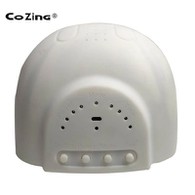
What's the technical parameter of the COZING-C320 transcranial red light therapy device?
|
Number of Diodes |
320 LEDs (ODM is acceptable) |
|
Wavelength: |
1050nm LED [ODM is acceptable] |
|
Frequency Range: |
Adjustable from 1 to 20,000 Hz |
|
Default Frequency: |
30Hz (Frequency value not displayed; adjustable via control buttons) |
|
Treatment Duration: |
Adjustable from 0 to 30 minutes |
|
LED Intensity Levels: |
4 levels: 25%, 50%, 75%, or 100% |
|
Remote Control: |
Wireless remote controller included |
|
Total Max. output power : |
16W |
|
Single LED max. output power: |
50mW |
|
Operation Mode: |
Manual or remote control |
Advantages
1. COZING-C320 is for general health use only and cannot be used for medical treatment.
2.COZING-C320 Photobiomodulation technology improves your cognitive ability and immunity.
3. Equipped with a remote control, you can adjust the frequency, power intensity and treatment time through the remote control.
4. Helmet modular design, with a safety belt to make it fit your head more closely.
5. Frequency adjustable: 1-20,000 Hz adjustable.
5. Wavelength, number of LEDs and style can be customized.
Clinical study:
1.INTRODUCTION: Previous studies have demonstrated that irradiating tissues with red to infrared light is effective in reducing brain lesions and degeneration in animal models of stroke, traumatic brain injury, Parkinson's disease, and Alzheimer's disease (AD). We explored the neuroprotective effects of near-infrared light (NIr) treatment in a mouse model, which was performed at an age when the cerebral cortex was already markedly lesioned.
2.Methods: We studied two mouse models with AD-related pathology: the K369I tau transgenic model (K3), which is genetically modified to form neuroprogenitor fibre tangles, and the APPswe/PSEN1dE9 transgenic model (APP/PS1), which is genetically modified to form amyloid plaques. Mice received 20 NIr treatments over a four-week period and histochemical methods were used to quantify AD-associated pathological features as well as other markers of cellular damage in the cerebral cortex and hippocampus.
3.Results: In K3 mice, NIr treatment was associated with reductions in hyperphosphorylated tau proteins, neuroprogenitor fibre tangles and markers of oxidative stress (4-hydroxynonenal and 8-hydroxy-2'-deoxyguanosine) to near wild-type levels in the cerebral cortex and hippocampus, as well as restoration of the expression of mitochondrial markers, cytochrome c oxidase, in surviving neurons. In APP/PS1 mice, NIr treatment was associated with a reduction in the size and number of amyloid β-protein plaques in the cerebral cortex and hippocampus.
4.CONCLUSIONS: Our results in two transgenic mouse models suggest that NIr may have potential as an effective minimally invasive intervention to attenuate or even reverse progressive brain degeneration.
Hot Tags: transcranial red light therapy device, China transcranial red light therapy device manufacturers, suppliers, factory, photobiomodulation brain, laser photobiomodulation therapy, photo bio modulation therapy, brain light therapy device, light therapy for brain, red light therapy device for brain