


Indications
Improvement of cerebral blood flow, reduction of dementia and restoration of cognitive functions
Improved cognitive scores, olfactory function, quality of life and caregiver stress in patients with cognitive decline


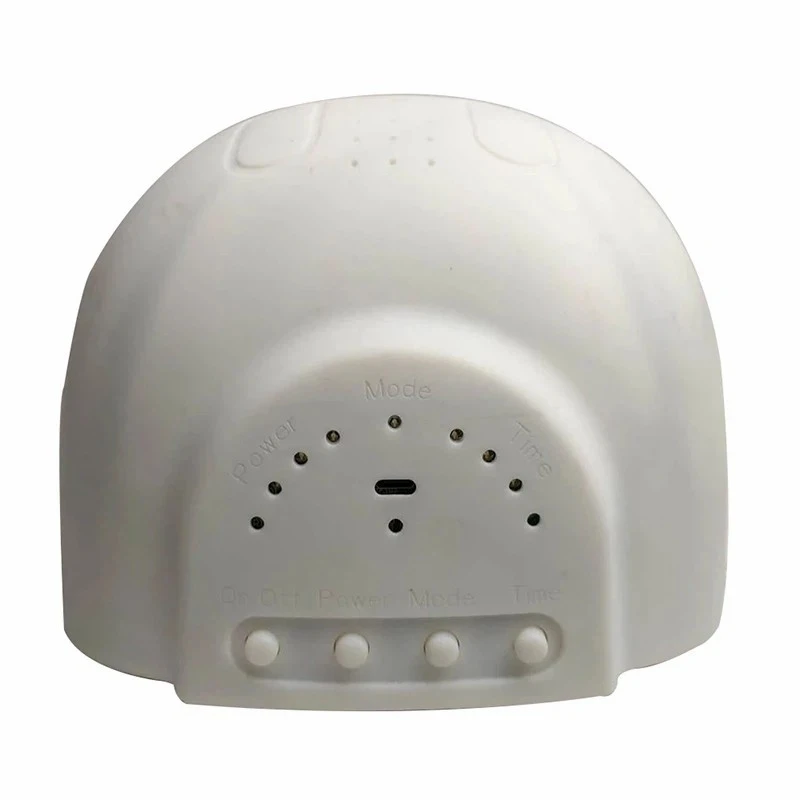
What's the technical parameter of the COZING-C320 red light helmet parkinson's?
|
Number of Light Sources |
320 LEDs (Custom ODM Available) |
|
Wavelength |
1050nm Near-Infrared LED |
|
Pulse Frequency Range |
Continuously adjustable from 1Hz to 20000Hz |
|
Default Pulse Frequency |
Pre-set to 30Hz (not displayed, adjustable via interface buttons) |
|
Session Time Setting |
0 to 30 minutes adjustable with auto shut-off |
|
Power Levels |
Adjustable in 4 steps: 25, 50, 75 or 100% |
|
Control Interface |
Smart wireless controller with memory function |
|
Total Power Output |
Up to 16W (depending on intensity setting) |
|
Individual LED Power |
50mW per LED |
|
User Modes |
Manual mode & remote-controlled operation |
|
Target Areas |
Covers 12 key brain regions for cognitive, sleep, and neuro-supportive therapy |
|
Add-on Compatibility |
Supports optional 650nm nasal & auditory probes for systemic photobiomodulation |
Advantages
1.LED Configuration: 320 high-intensity 1050nm near-infrared (NIR) LEDs (50mW per diode, 16W total output).
2.Frequency Range: Adjustable 1-20,000Hz for tailored neuromodulation (e.g., high frequency for tremor suppression, low frequency for rigidity relief).
3.Brain Zoning: 12 independent zones targeting motor cortex, basal ganglia, and dopaminergic pathways.
4.Safety Compliance: FDA-registered, CE-certified.
5.Battery: Rechargeable lithium-ion (8-hour runtime, 2-hour fast charge).
6.Materials: Medical-grade silicone padding, hypoallergenic fabric.
Clinical study:
1.Purpose: This paper submits a review on photobiomodulation (PBM) in Alzheimer's dementia. The addition of PBM to neurodegenerative diseases is a dual therapy that is currently receiving increasing attention because it is safe, antiviral, and anti-inflammatory. Photon stimulation of mitochondria increases adenosine triphosphate and the proteasome increases removal of misfolded proteins. Neurofeedback enhances neuroplasticity, increases brain-derived neurofactor mRNA expression, and increases hippocampal dendrite production and density, while improving dendrites, density, and neuronal survival.
2.BACKGROUND: The pathophysiological mechanism of Alzheimer's disease is the accumulation of hyperphosphorylated tau protein neuroprogenitor fibril tangles and the subsequent formation of amyloid beta protein (Aβ) plaques. PBM and neurobiofeedback (NBF) address multiple gene expression and multiple pathogenic pathways inflammation, reactive oxidative stress, mitochondrial disease, insulin resistance, methylation deficits, neuroprotective factor modulation, and regional hypoperfusion of the brain. There is no human evidence that the use of constant light sources provides clinical therapeutic benefit while significantly increasing safety concerns.
3.METHODS: A PBM test for early- to mid-stage Alzheimer's disease was reported in 2017 as a double-blind, placebo-controlled trial in a small cohort of subjects with early- to mid-stage dementia under an Institutional Review Board (IRB)-approved Food and Drug Administration (FDA) clinical trial.
4.RESULTS: Subjects treated with PBM showed that actively treated subjects tended to show greater improvements in executive functions: drawing clocks, immediate recall, actual memory, and visual attention and task switching (Trials A and B). A larger study conducted in Temple, Texas, where subjects participated in a double-blind, placebo-controlled, IRB-approved FDA clinical trial, demonstrated that increased time spent drawing the clock improved memory and cognitive performance.
5.CONCLUSION: Trials of the next-generation COZING helmet for use in patients with Parkinson's disease will incorporate insights from quantitative EEG analyses regarding significant low coherence deficits in the bilateral occipital lobes. Future applications will integrate non-invasive stimulation, including whole-body stimulation, transcranial stimulation, infrared light stimulation, and pulsed electromagnetic frequency stimulation.
Hot Tags: red light helmet parkinson's, China red light helmet parkinson's manufacturers, suppliers, factory, brain light therapy device, photo bio modulation therapy, light therapy for brain, laser photobiomodulation therapy, red light therapy device for brain, photobiomodulation brain


