


What are the indications of the home laser treatment for arthritis?
- Intervertebral Disk Disease
- Hip Dysplasia
- Cmanial Cruciate Ligament
- Chronic Pain & Inflammation
- Arthritis
- Lower extremity tendinopathy
- Plantar fasciitis
What's the technical parameter of the home laser treatment for arthritis?
| Product Name | Photodynamic laser therapy Pain Relief Pad |
| Model Name | COZING-USBP1 |
| Brand: | COZING |
| Material | ABS |
| Feature | USB plug, can be connected to PC port, mobile power, laptop, adapter or |
| power bank | |
| Wavelength | 650 nm+808nm |
| Laser Diode | 3 pcs 808nm + 6 pcs 650nm laser diodes |
| Certificate | CE, ROHS |
| Application | Pain relief |
What are the advantages of the home laser treatment for arthritis?
1. Favorable clinical trial findings indicating approximately 92% therapeutic efficacy.
2. Low-level laser therapy employs non-invasive irradiation, devoid of adverse reactions, representing an environmentally friendly form of physical therapy.
3. Accreditation and patent safeguarding ensured upon CE certification.
4. Laser diodes sourced internationally to guarantee laser output precision.
5. Compact dimensions, lightweight, and portable, enabling treatment virtually anywhere.
6. Treatment procedure is hassle-free; simply connect to a power bank/phone/PC.
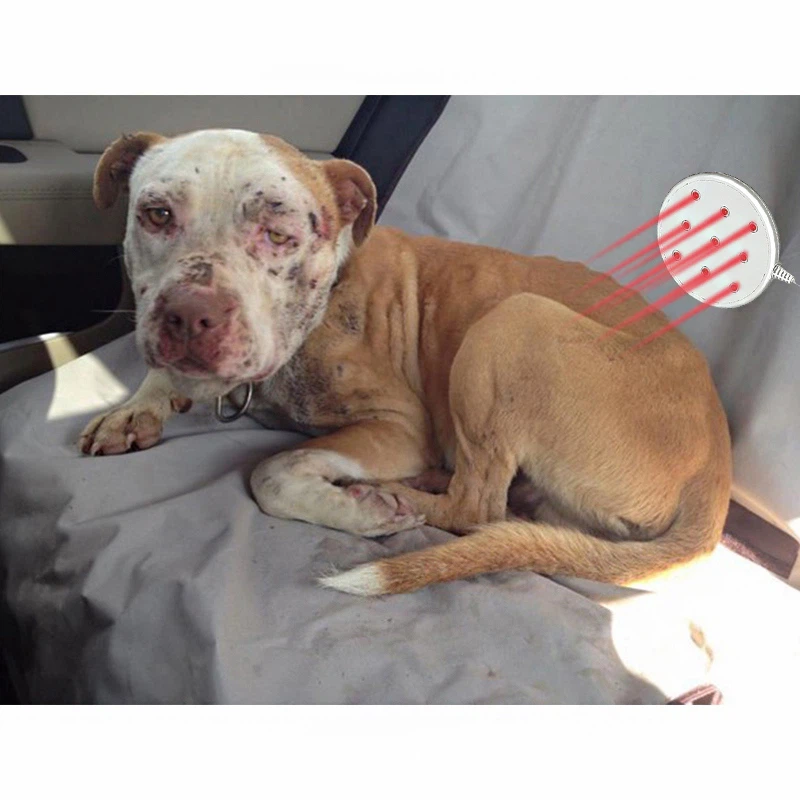

How does the home laser treatment for arthritis work?
Photodynamic therapy light sources include laser light, light-emitting diodes (LEDs), red light, and many other visible lights (including natural sunlight).PDT works by direct injury to the target cells and tissues. This involves the production of an activated oxygen molecule that can injure or destroy nearby cells. Because the normal skin barrier is not present at the sites of the actinic keratoses, the photosensitizing molecule is preferentially absorbed there and then activated by light. The activated oxygen destroys the adjacent abnormal tissue. Once the areas have healed following PDT, the areas are reexamined to see if additional treatments or biopsies are needed.
With traditional cryosurgery (freezing with liquid nitrogen), only the visible actinic keratoses can be treated. Since many actinic keratoses are often not evident, PDT might be preferable since it presumably would destroy these "subclinical" lesions. PDT allows for the treatment of an entire area of sun damage simultaneously, but subsequent treatments may be necessary.


COZING-USBP1 home laser treatment for arthritis Product Display

Home laser treatment for arthritis Clinical Study:
Objectives
This study evaluated the efficacy of low-level laser therapy (LLLT) in reducing pain and disability in patients with lower extremity tendinopathy and plantar fasciitis.
Design
Systematic review and meta-analysis.
Eligibility Criteria for Study Selection
Only randomized controlled trials involving participants with lower extremity tendinopathy or plantar fasciitis treated with LLLT were included.
Data Extraction and Synthesis
Random effects meta-analyses were conducted with dose subgroups based on the World Association for Laser Therapy treatment guidelines. The risk of bias was evaluated using the PEDro scale.
Results
LLLT was compared with a placebo (10 trials), other treatments (5 trials), and as an adjunct intervention (3 trials). The study quality ranged from moderate to high. Overall, LLLT significantly reduced pain at the end of therapy (13.15 mm Visual Analogue Scale (VAS; 95% CI 7.82 to 18.48)) and 4-12 weeks post-treatment (12.56 mm VAS (95% CI 5.69 to 19.42)). Disability was also significantly reduced by LLLT at the end of therapy (Standardized Mean Difference (SMD) = 0.39 (95% CI 0.09 to 0.7)) and 4-9 weeks post-treatment (SMD = 0.32 (95% CI 0.05 to 0.59)). Compared to placebo, recommended LLLT doses significantly reduced pain at the end of therapy (14.98 mm VAS (95% CI 3.74 to 26.22)) and 4-8 weeks later (14.00 mm VAS (95% CI 2.81 to 25.19)). Additionally, as an adjunct to exercise therapy, LLLT significantly reduced pain versus exercise alone at the end of therapy (18.15 mm VAS (95% CI 10.55 to 25.76)) and 4-9 weeks post-treatment (15.90 mm VAS (95% CI 2.3 to 29.51)). No adverse events were reported.
Conclusion
LLLT effectively reduces pain and disability in lower extremity tendinopathy and plantar fasciitis in the short to medium term. However, long-term data are lacking, and some uncertainty about the effect size persists due to wide confidence intervals and the absence of large trials.
FAQ


