


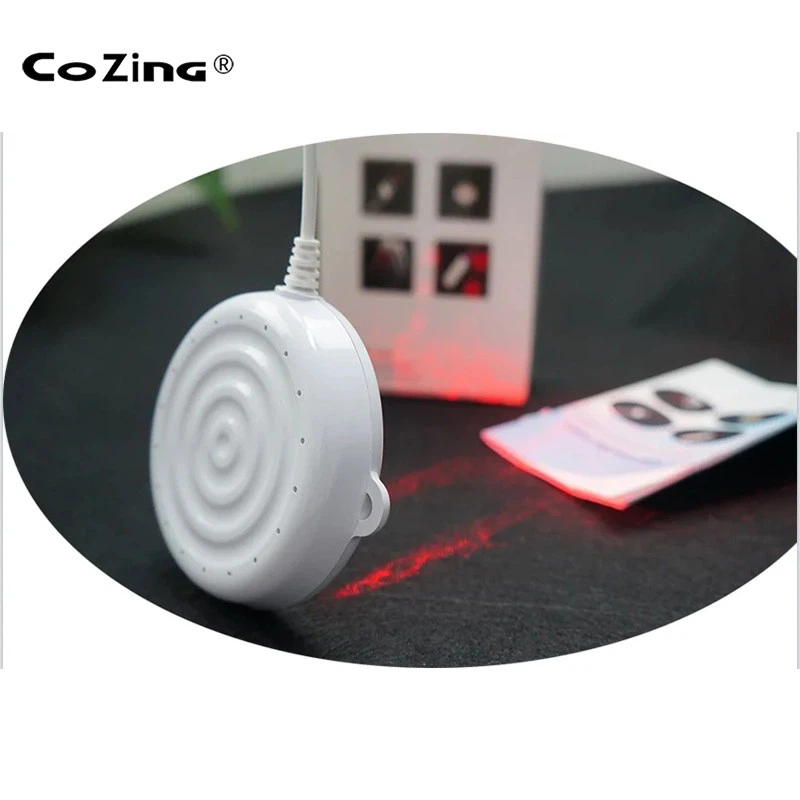
What are the indications of the COZING-USBP1 red light laser therapy for pain?
- Rheumatoid arthritis
- Meniscus injury
- Degenerative Joint Disease
- Relieving pain and soft tissue injuries
- Achilles tendon issues
- Accelerating infection recovery
- Autoimmune Disease


What's the technical parameter of the red light laser therapy for pain?
|
Product Name |
650 nm+808nm Pain Relief Pad |
|
Brand Name |
COZING |
|
Application |
pain relieve |
|
Material |
ABS |
|
Feature |
The USB plug is compatible for direct connection to a computer, mobile power source, laptop, adapter, or portable power bank. |
|
Wavelength |
650 nm,808nm |
|
Laser Diode |
3 pcs×808nm + 6 pcs×650nm, the wavelength and power intensity can be adjusted. |
|
Certificate |
CE, ROHS |
What are the advantages of the COZING-USBP1 red light laser therapy for pain?
1.Clinical trial findings demonstrating approximately 92% therapeutic efficacy.
2. Photobiomodulation (PBM) utilizing non-intrusive irradiation, free from any adverse effects
3. CE certification ensures both accreditation and patent safeguarding.
4. Laser diode imports guarantee precision in laser output.
5. Compact design, lightweight, and portable, facilitating treatment virtually anywhere.
6. Treatment procedure is user-friendly; simply connect to a power bank for immediate use.

How does the COZING-USBP1 red light laser therapy for pain work?
LLLT or "photodynamic laser treatment" has been widely used in pain management with proposed anti-inflammatory and analgesic effects. LLLT is a favorable option for pain as it offers a non-invasive therapeutic option that is thought to stimulate biologic activity and promote tissue healing . This is particularly relevant at a time when the incidence of chronic pain is increasing.
COZING-USBP1 red light laser therapy for pain Product Display


COZING-USBP1 red light laser therapy for pain Clinical Study:
Objective of Review
This review aims to consolidate current knowledge and discuss the strengths and weaknesses of low-level laser therapy (LLLT) as a potential treatment for inflammatory diseases.
Recent Discoveries
LLLT has shown promise as a therapeutic option, especially for skin and joint diseases due to their easy accessibility for treatment. The mechanisms behind LLLT support its anti-inflammatory capabilities, as well as its potential to promote tissue growth and repair. While the conventional treatment for most inflammatory conditions involves immunosuppressive drugs like corticosteroids, which have significant side effects, LLLT presents a non-invasive alternative with minimal adverse effects. Additionally, it is cost-effective, readily available, and even suitable for patient-directed use at home.
Summary
Evidence suggests that LLLT can modulate the immune response in skin and joints and has demonstrated effectiveness in humans, particularly in reducing bacterial colonization related to chronic rhinosinusitis. However, inconsistencies in laser application methods, along with insufficient research on laser types, dosages, and wavelengths, hinder the widespread adoption of LLLT. The variability in these factors makes it challenging to draw definitive conclusions about the efficacy and mechanisms of LLLT, highlighting the need for more rigorous and standardized studies.
FAQ


