


What are the indications of the COZING-USBP red light photodynamic therapy?
- Reduction of Hypertrophic Scars
- Wound care
- Muscular injury
- Speeding the healing of infections
- Overexertion of muscle
- Soft tissue pain
- Neck arthritis
- Disc bulge
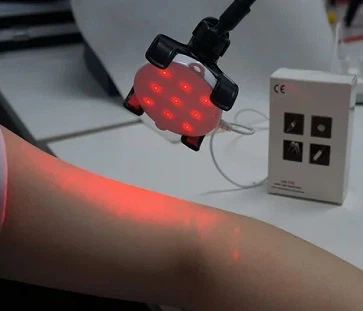

What's the technical parameter of the COZING-USBP red light photodynamic therapy?
|
Product Name |
650 nm photobiomodulation treatment Pad |
|
Brand Name |
COZING |
|
Application |
Pain relief |
|
Material |
ABS |
|
Feature |
USB port, can be directly connected to computer, mobile power bank. |
|
Wavelength |
650 nm laser |
|
Laser Diode |
9 pcs |
|
Certificate |
CE, ROHS |
|
Environment temperature |
-20°C ~ 40°C |
What are the advantages of COZING-USBP red light photodynamic therapy?
1,1050nm 904nm 808nm 450nm 650nm options.
2,photodynamatic therapy USB LLLT treatment Device
3,USB type Powered by the phone &USB port computer or power bank
4,Small size, easy to carry , and can be treatment at anywhere.
5.Certification and patents protection provided with the passing of CE
6.Reduce inflammation, wounds and ulcers.
How does COZING-USBP red light photodynamic therapy work?
Red light therapy, also known as low-level laser therapy (LLLT) or photobiomodulation therapy, is a non-invasive treatment that utilizes specific wavelengths of red light to stimulate cellular processes and promote healing. When applied to muscular injuries, red light therapy works through several mechanisms:Stimulation of Tissue Repair and Regeneration.Red light therapy promotes the synthesis of collagen, the main structural protein in muscles, tendons, and ligaments. This stimulation of collagen production helps to strengthen and repair damaged muscle fibers. Additionally, red light therapy enhances the proliferation of fibroblasts, which are cells involved in tissue repair and regeneration.

COZING-USBP red light photodynamic therapy product display:


COZING-USBP red light photodynamic therapy Clinical Study:
Abstract
Photobiomodulation (PBM) is a technique utilizing light to influence cellular functions and biological processes. Over recent decades, PBM has received significant attention for its potential in various medical applications due to its non-invasive nature and minimal side effects. We performed a narrative review of articles on photobiomodulation, LED light therapy, and low-level laser therapy, focusing on their dermatological applications published in the last six years. This review covers research studies, clinical trials, and technological advancements.
This review elucidates the mechanisms of PBM, including its interaction with cellular chromophores and the activation of intracellular signaling pathways. Clinical trials and experimental studies provide evidence of PBM's effectiveness in clinical practice, with a special focus on dermatology. Additionally, advancements in PBM technology, such as innovative light sources and treatment protocols, are discussed to optimize therapeutic outcomes and enhance patient care. This narrative review highlights PBM's promising role as a non-invasive therapeutic approach with wide clinical applicability. Despite the need for more research to establish standard protocols, PBM shows great potential for addressing various medical conditions and improving patient outcomes in modern healthcare.
Several clinical trials have examined the impact of PBM on scars using both lasers and LED light. Lasers are often the first line of treatment for scars, typically employing ablative types like erbium or CO2 lasers, which operate through selective necrosis at the target site. In a clinical trial involving 10 patients with keloids, PDL 585 5 J/cm² was compared to low-dose, high-dose, and intralesional 5-fluorouracil combined with triamcinolone acetonide. Weekly treatments over eight weeks showed no significant differences among the treatment groups.
Asilian et al. evaluated 69 patients in a 12-week double-blind study with three groups: PDL at 5-7 J/cm², intralesional 5-fluorouracil, and a combination of PDL with 5-fluorouracil and triamcinolone acetonide. No significant differences were found, although the PDL group showed better aesthetic outcomes and less erythema. Another trial with 19 patients compared PDL 595 nm at pulse durations of 0.45 milliseconds versus 40 milliseconds, finding better results with the shorter pulse duration.
Combining a 532 nm laser at low doses with silicone patches was effective in improving hypertrophic scars in 37 patients. Both PDL 650 nm and Nd:YAG 1064 nm lasers were effective in treating hypertrophic scars over six sessions, with no significant differences between the two laser types. Both PDL 650 and Nd:YAG 1064 lasers have been effective independently in treating scars. Overall, PDL at subpurpuric doses, often combined with other treatments, was commonly used to improve aesthetic outcomes and reduce erythema in hypertrophic and keloid scars, though it did not consistently enhance overall results. Longer wavelengths like 1064 nm were likely effective, but only two clinical trials have addressed this.
Conclusions
Photobiomodulation in dermatology is an emerging area of interest with limited well-structured, placebo-controlled clinical trials available. A critical review of the literature reveals the need for more standardized clinical recommendations, as PBM can be conducted with various parameters, complicating comparisons between studies. Despite these challenges, the review underscores the potential of PBM in identifying new indications and guiding future research to clarify its applications and effectiveness.
FAQ


